
Building a diverse and inclusive workforce is no longer optional—it is a strategic priority. Organizations that actively monitor diversity metrics gain stronger innovation, better employee engagement, and improved decision-making. However, many HR teams still store diversity data across multiple spreadsheets and HR systems. As a result, leadership lacks visibility into workforce composition, compensation patterns, and diversity-related costs.
That is exactly why the Employee Diversity Dashboard in Google Sheets becomes an essential HR analytics and DEI reporting tool.
This ready-to-use dashboard transforms raw employee data into a structured, visual, and insight-driven reporting system. It allows HR teams, DEI leaders, finance teams, and executives to analyze workforce diversity, compensation, performance, and cost trends across departments, regions, employment types, and nationalities—all from one interactive Google Sheets dashboard.
Because the dashboard runs entirely in Google Sheets, it offers real-time updates, easy collaboration, automatic chart refresh, and cloud-based access without requiring expensive BI tools.
✨ Key Features of the Employee Diversity Dashboard in Google Sheets
👥 1. Centralized Workforce Diversity View
All diversity and workforce metrics are consolidated into a single dashboard, eliminating fragmented HR files and manual reporting.
💰 2. Workforce Cost & Compensation Tracking
Monitor salary, bonus, and total workforce cost alongside diversity metrics for complete financial visibility.
📊 3. Multi-Dimensional Analysis
Analyze diversity by department, region, nationality, gender, and employment status using intuitive charts.
📈 4. Monthly Trend Monitoring
Track how workforce size, compensation, and diversity metrics change month over month.
🤝 5. Google Sheets-Based Collaboration
HR and leadership teams can work together in real time with secure access controls.
📦 What’s Inside the Employee Diversity Dashboard in Google Sheets
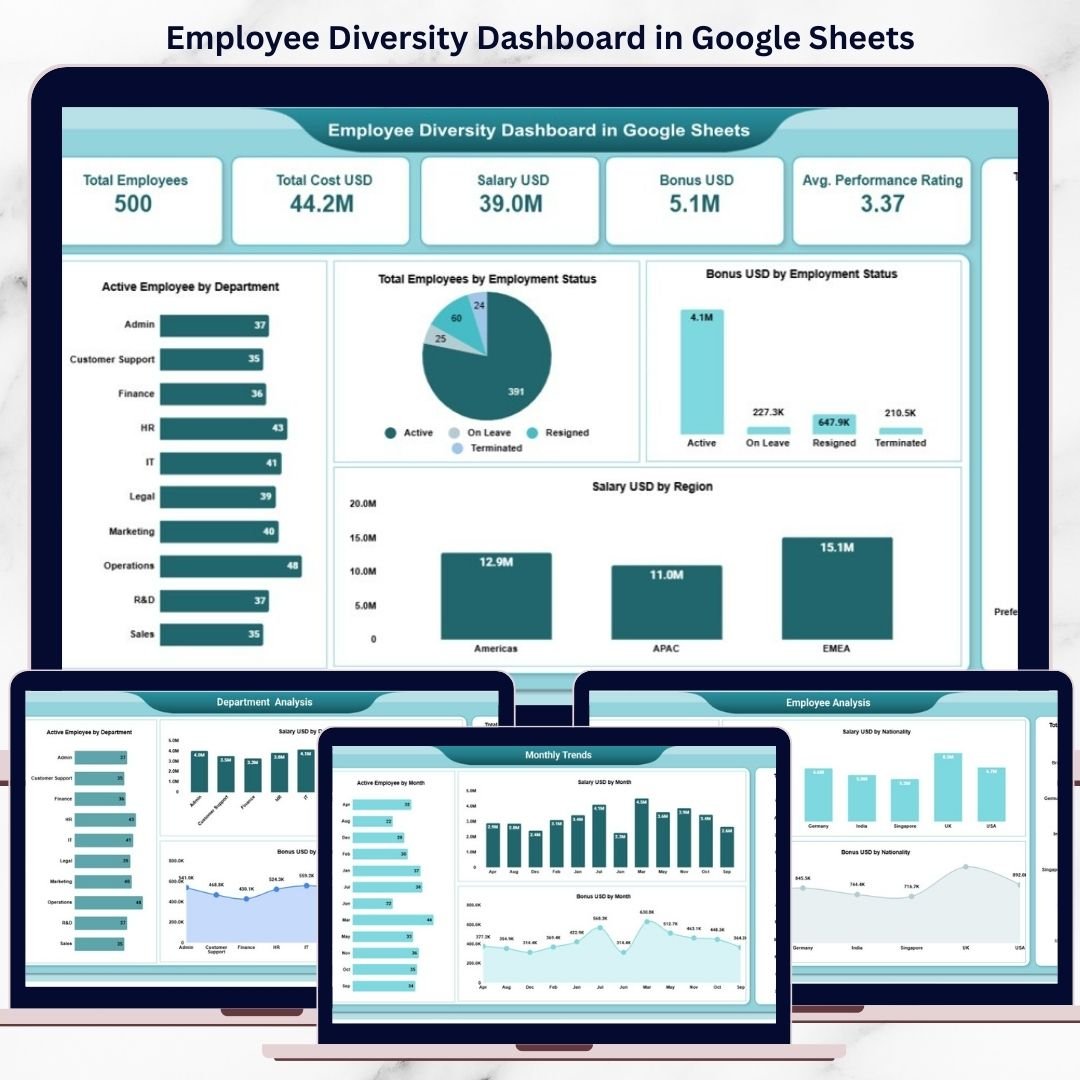
🖥️ Overview Sheet Tab – Workforce Snapshot
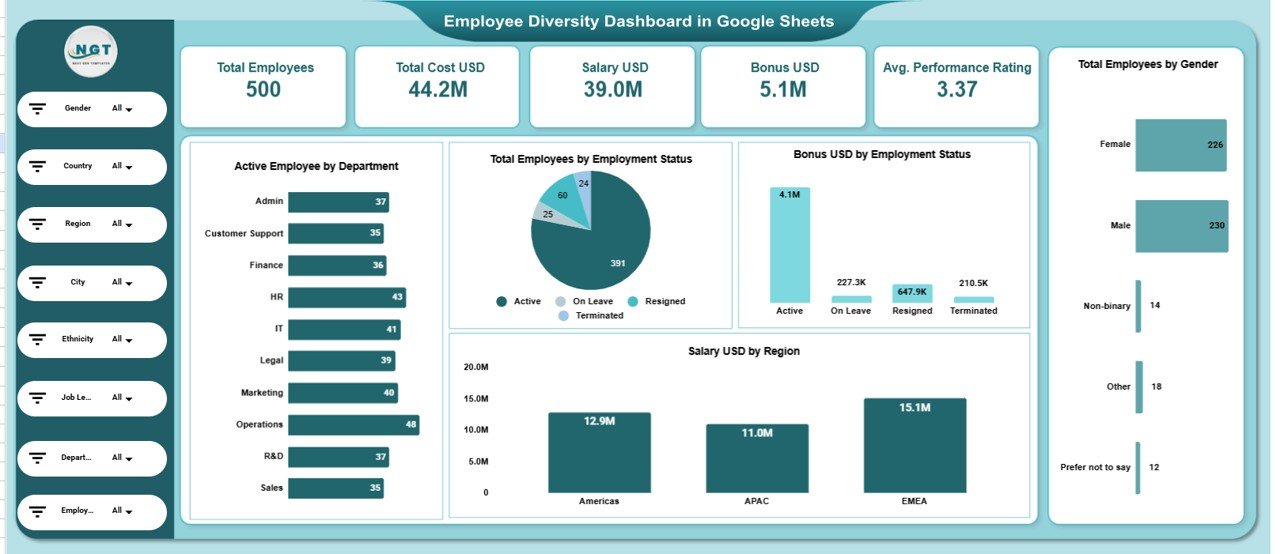
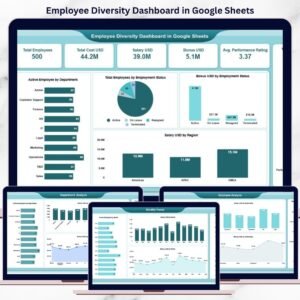
This is the main dashboard view that provides a high-level summary using KPI cards and charts.
📌 KPI Cards on the Dashboard
-
Total Employees – Overall workforce size
-
Total Cost USD – Total workforce cost
-
Salary USD – Total salary paid
-
Bonus USD – Total bonus paid
-
Average Performance Rating – Average employee performance score
These KPI cards help leadership instantly understand workforce scale, cost, and performance.
📊 Charts in the Overview Section
Active Employees by Department
Shows how employees are distributed across departments.
Total Employees by Employment Status
Visualizes full-time, part-time, contract, and other employment types.
Bonus USD by Employment Status
Highlights how bonuses are allocated across employment categories.
Total Employees by Gender
Provides a clear and simple gender diversity overview.
Salary USD by Region
Shows how compensation is distributed geographically.
All visuals refresh automatically when data changes.
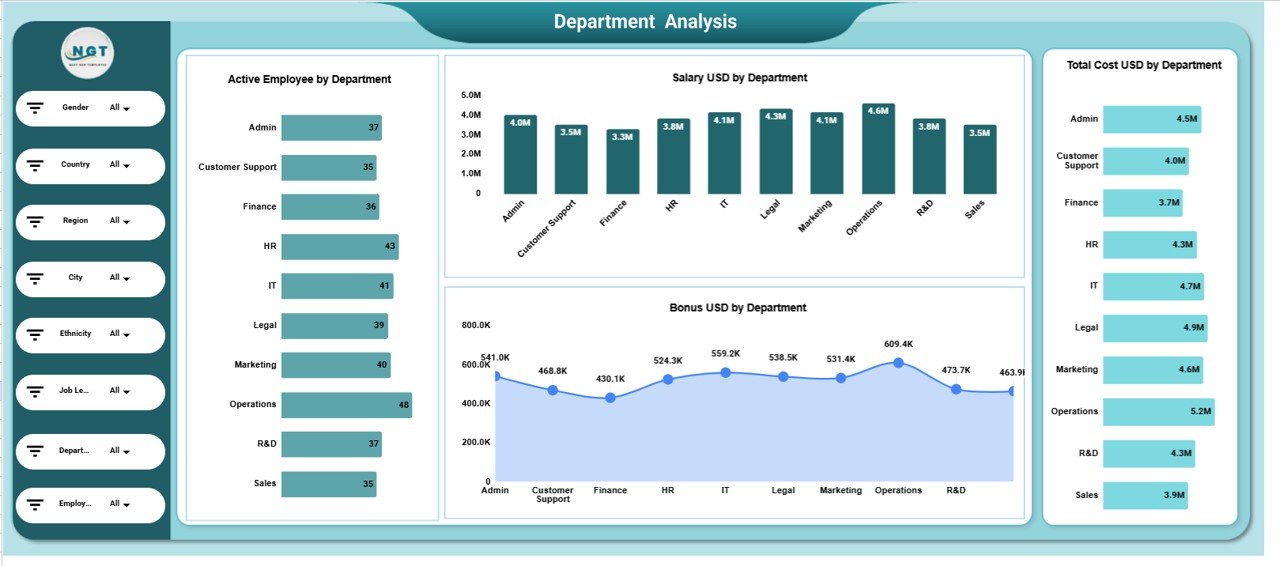
🏢 Department Analysis Section
This section evaluates workforce diversity and cost at the department level using:
-
Active Employees by Department
-
Salary USD by Department
-
Total Cost USD by Department
-
Bonus USD by Department
It helps HR teams identify departments with high costs, growth trends, or diversity gaps.
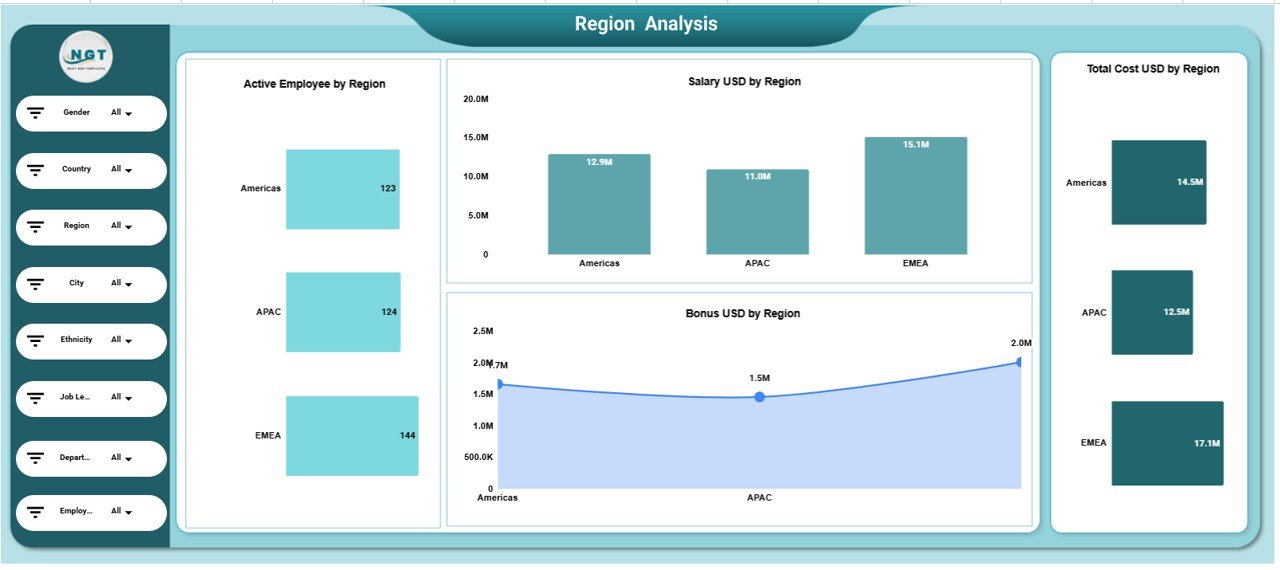
🌍 Region Analysis Section
This section focuses on regional workforce insights:
-
Active Employees by Region
-
Salary USD by Region
-
Total Cost USD by Region
-
Bonus USD by Region
It supports regional workforce planning and compensation benchmarking.
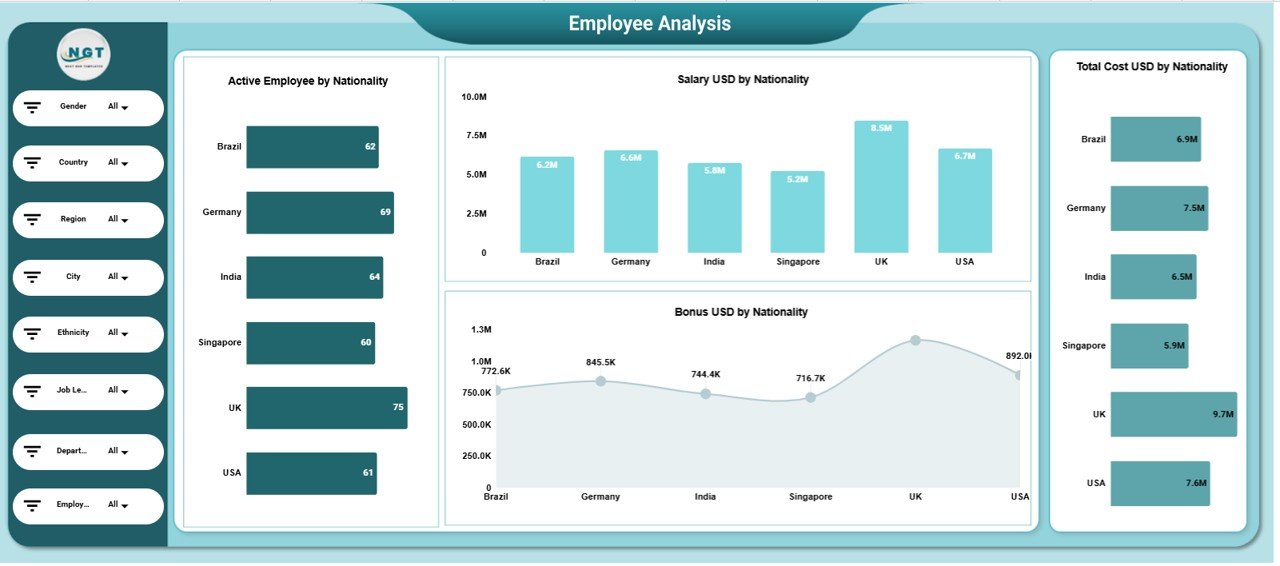
🧑🤝🧑 Employee Analysis (Nationality-Based)
This section analyzes cultural diversity using nationality-based metrics:
-
Active Employees by Nationality
-
Salary USD by Nationality
-
Total Cost USD by Nationality
-
Bonus USD by Nationality
It helps organizations monitor inclusion and global workforce balance.
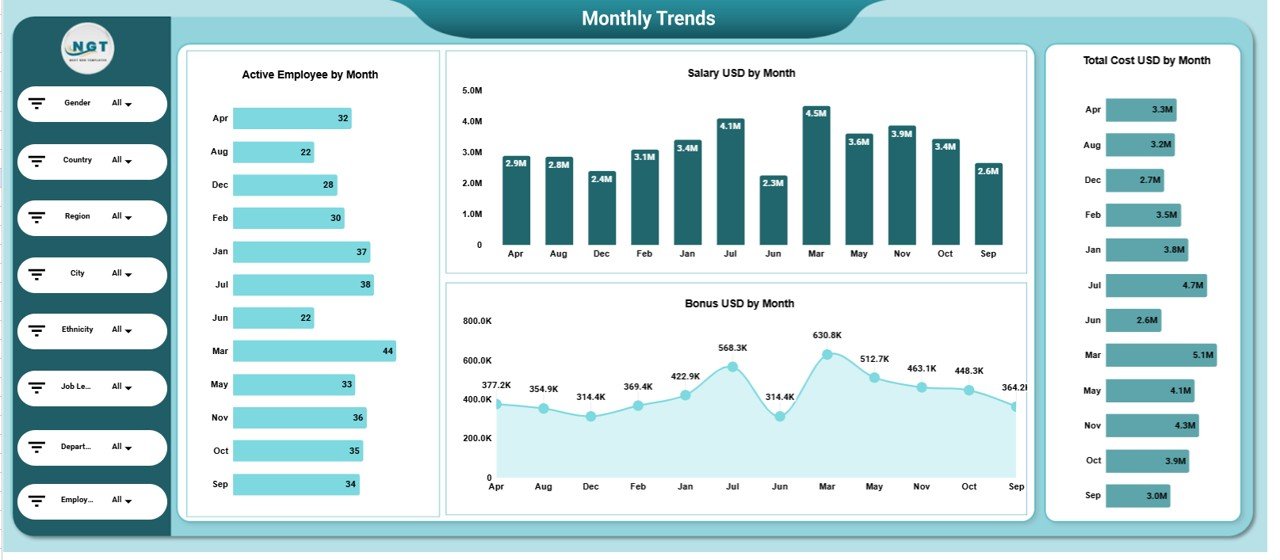
📅 Monthly Trends Analysis Section
Track workforce evolution across the year with:
-
Active Employees by Month
-
Salary USD by Month
-
Total Cost USD by Month
-
Bonus USD by Month
This reveals hiring patterns, seasonal changes, and cost growth trends.
📄 Data Input Sheet Tab – Backend Data Source
The Data Input sheet powers the entire dashboard. Typical columns include:
-
Employee ID
-
Department
-
Region
-
Nationality
-
Gender
-
Employment Status
-
Salary USD
-
Bonus USD
-
Performance Rating
-
Month
Updating this sheet automatically refreshes all dashboard visuals.
🎯 Who Can Benefit from This Employee Diversity Dashboard
👥 HR Teams
Track workforce diversity, costs, and performance effortlessly.
🌈 DEI Leaders
Monitor inclusion metrics and support diversity initiatives.
💼 Finance Teams
Analyze compensation and workforce cost trends.
🏢 Executives & Leadership
Gain a clear, data-driven view of workforce composition.
🚀 Growing Organizations
Scale diversity reporting without complexity.
### Click here to read the Detailed blog post
Watch the step-by-step video tutorial:



Reviews
There are no reviews yet.