
Tissue engineering is a highly specialized and data-intensive field where success depends on precise monitoring of research efficiency, quality outcomes, cost control, and long-term performance trends. From experimental productivity and process efficiency to outcome quality and timeline adherence, teams must track multiple KPIs simultaneously. However, managing these KPIs manually across multiple spreadsheets often leads to inconsistencies, errors, and delayed insights.
That is exactly why the Tissue Engineering KPI Dashboard in Google Sheets becomes an essential performance management tool.
This professionally designed, ready-to-use KPI dashboard helps tissue engineering research teams, biotech organizations, and life-science professionals track, analyze, and compare critical KPIs in one structured and automated Google Sheets file. Instead of spending hours consolidating reports, teams can instantly visualize performance, identify gaps, and make data-driven decisions.
Because the dashboard is built entirely in Google Sheets, it is cloud-based, collaborative, and easy to customize—without requiring any coding, BI tools, or advanced technical skills.
🚀 Key Features of the Tissue Engineering KPI Dashboard
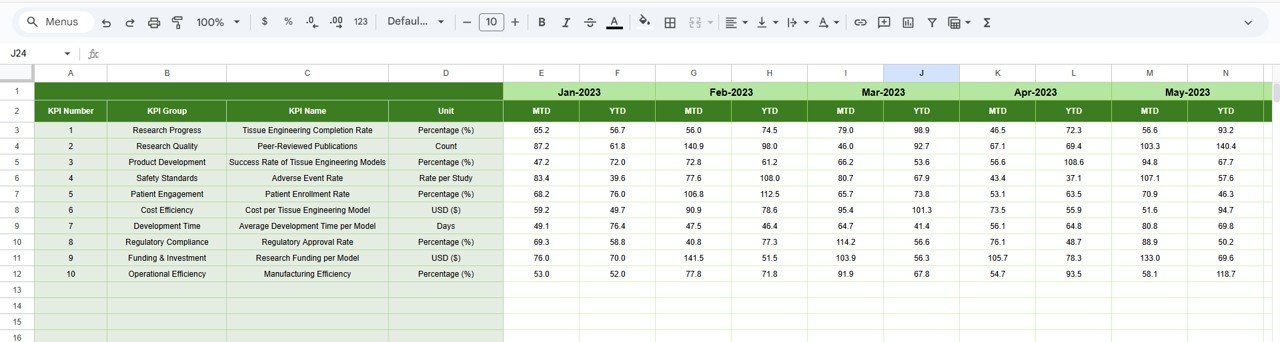
📊 Centralized KPI Monitoring
Track all key tissue engineering KPIs in one dashboard, including:
-
Month-to-Date (MTD) performance
-
Year-to-Date (YTD) performance
-
Target vs Actual comparison
-
Previous Year vs Current Year comparison
This structure supports both short-term operational tracking and long-term strategic evaluation.
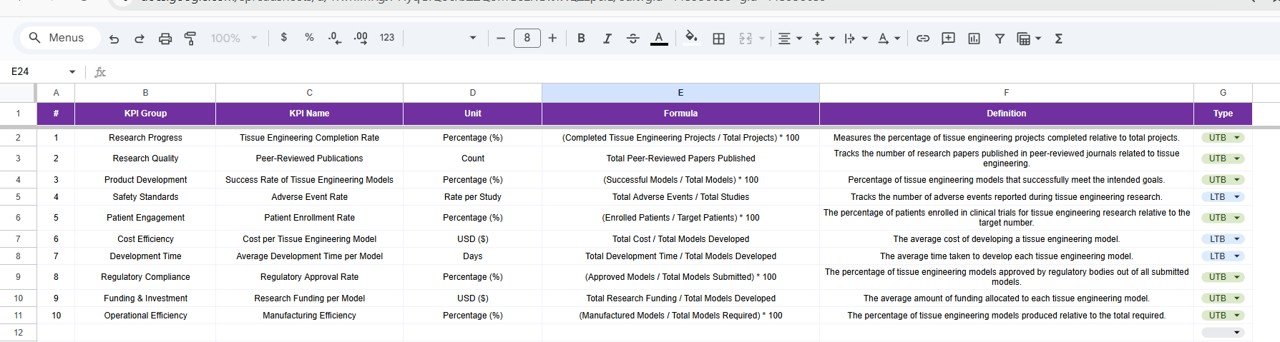
🎯 Structured KPI Governance
Each KPI is maintained with:
-
Unit of measurement
-
Formula
-
Definition
-
KPI Type:
-
UTB (Upper the Better)
-
LTB (Lower the Better)
-
This ensures consistency, transparency, and audit readiness.
📂 Dashboard Structure – 6 Structured Worksheets
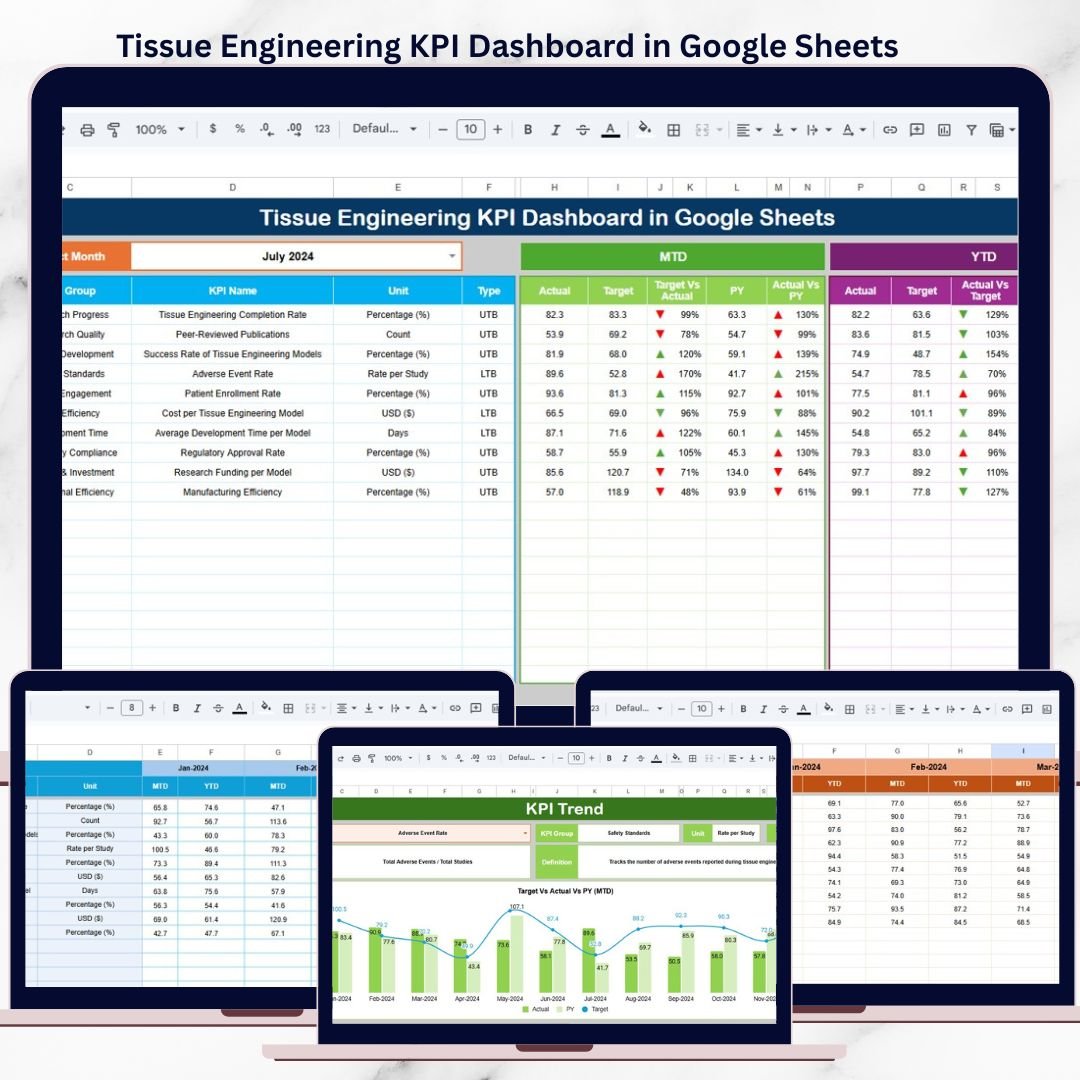
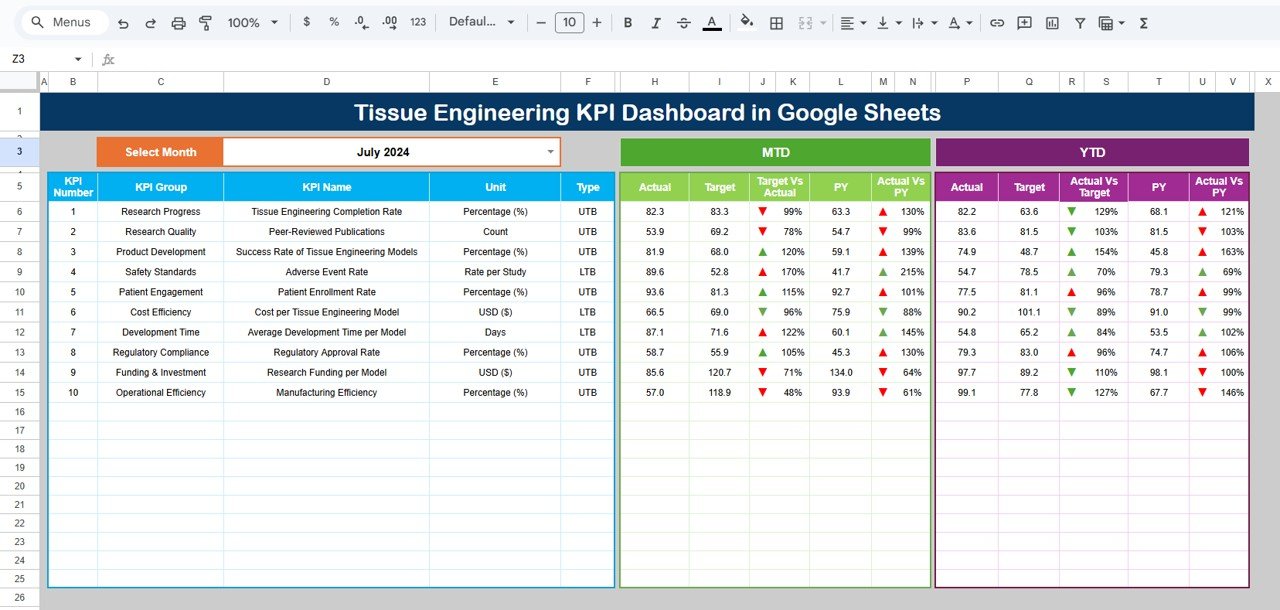
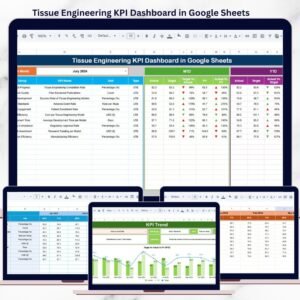
🏠 1. Dashboard Sheet – KPI Overview
This is the main executive dashboard where all KPIs are displayed together.
Key Capabilities
-
Month selector available in Cell D3
-
Automatic refresh of all KPIs when the month changes
-
Displays:
-
MTD Actual, Target, Previous Year
-
YTD Actual, Target, Previous Year
-
-
Built-in variance analysis:
-
Target vs Actual
-
Previous Year vs Actual
-
-
Visual indicators:
-
🚦 Traffic-light colors
-
🔺 Up arrows for improvement
-
🔻 Down arrows for decline
-
This sheet is ideal for leadership reviews, research governance meetings, and performance discussions.
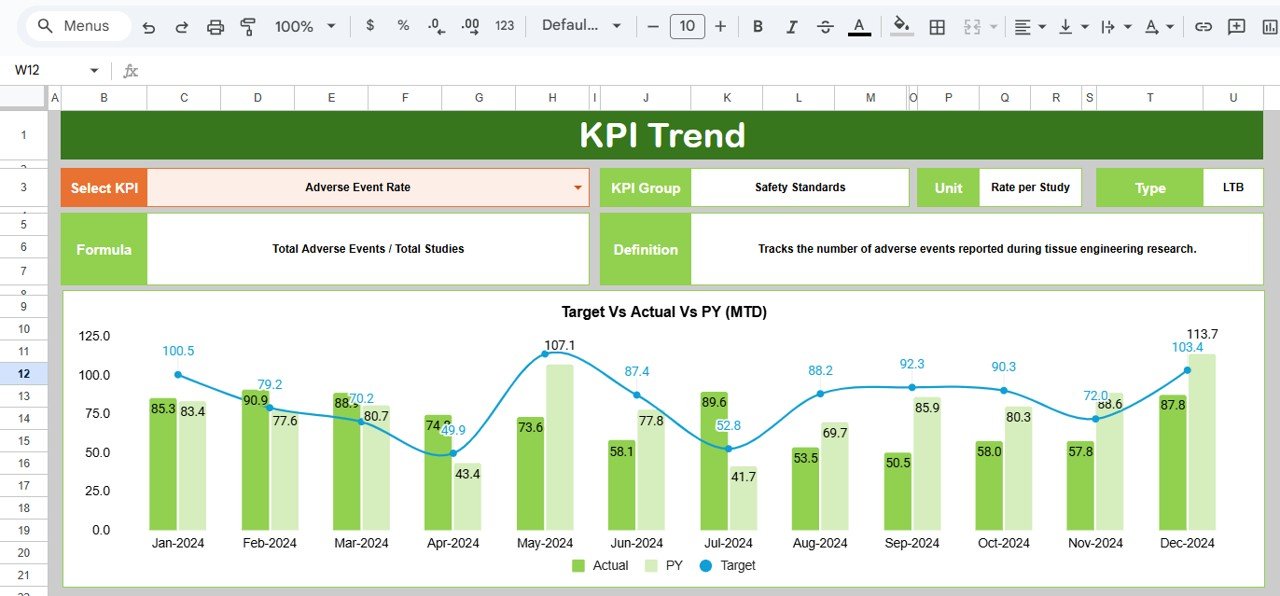
📈 2. KPI Trend Sheet – KPI-Wise Analysis
This sheet enables deep-dive analysis of individual KPIs.
How It Works
-
Select a KPI from the dropdown in Cell C3
-
Automatically displays:
-
KPI Group
-
KPI Unit
-
KPI Type (UTB / LTB)
-
KPI Formula
-
KPI Definition
-
This ensures all stakeholders interpret KPIs consistently and correctly.
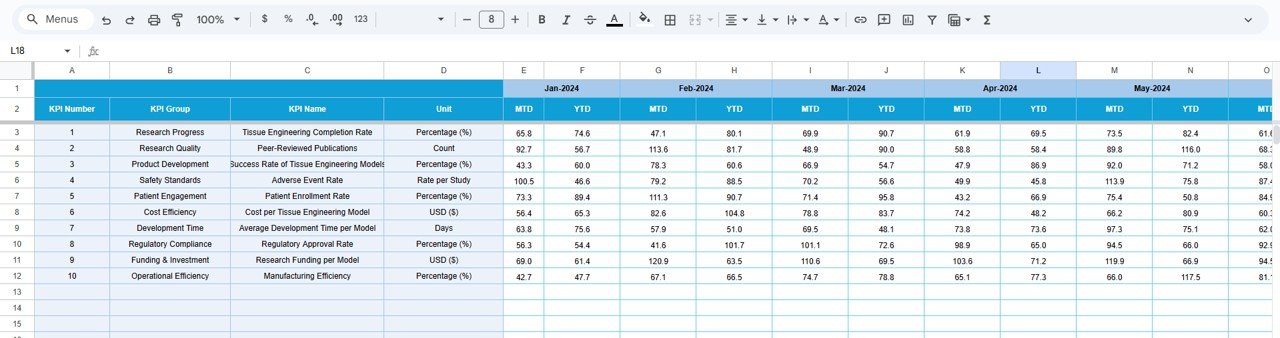
🧾 3. Actual Number Sheet – Current Year Data Entry
This sheet is used to enter actual KPI values.
Key Features
-
Enter MTD and YTD actual values
-
Month selection available in Cell E1
-
Only the first month of the year needs to be defined once
-
Remaining months adjust automatically
This design minimizes manual effort and reduces the risk of data errors.
🎯 4. Target Sheet – Performance Goals
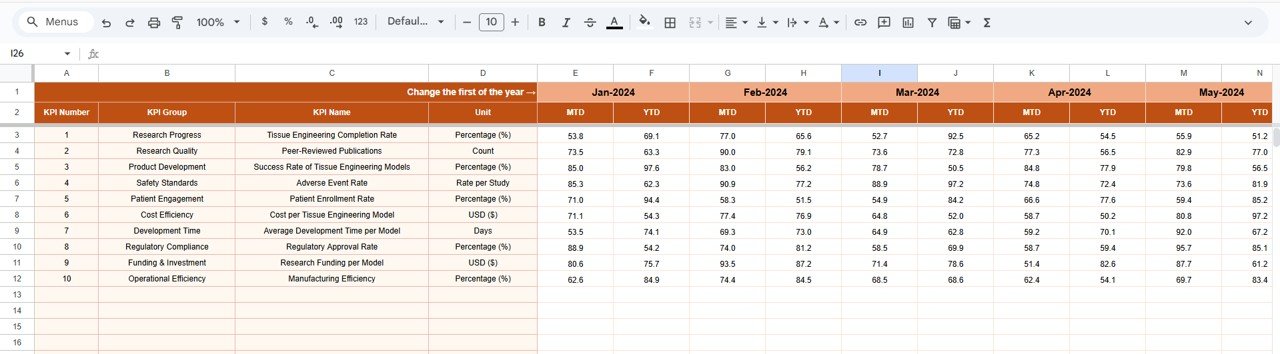
The Target Sheet stores planned KPI targets.
What You Define
-
Monthly (MTD) targets
-
Cumulative (YTD) targets
Targets feed directly into:
-
Dashboard variance calculations
-
Performance indicators
-
Trend analysis
This ensures alignment between research goals and operational execution.
📊 5. Previous Year Number Sheet – Historical Comparison
This sheet captures last year’s KPI values.
Purpose
-
Enables year-over-year performance analysis
-
Highlights long-term improvements or declines
-
Supports benchmarking and strategic planning
📚 6. KPI Definition Sheet – KPI Master
This is the backbone of the dashboard.
Columns Included
-
KPI Name
-
KPI Group
-
Unit
-
Formula
-
KPI Definition
-
KPI Type (UTB / LTB)
Centralizing KPI logic ensures clarity, governance, and scalability.
🎯 Advantages of the Tissue Engineering KPI Dashboard
-
Centralized KPI tracking for tissue engineering projects
-
Significant time savings compared to manual reporting
-
Clear visibility into performance gaps
-
Easy comparison of actuals vs targets and prior year
-
Fully cloud-based in Google Sheets
-
Reusable across projects, programs, and years
👥 Who Should Use This Dashboard?
-
Tissue Engineering Research Teams
-
Biotechnology & Life-Science Companies
-
R&D and Innovation Teams
-
Quality and Process Improvement Teams
-
Research Program Managers
-
Data and Performance Analysts
Click here to Read detailed blog post
Watch the step-by-step video tutorial:
Visit our YouTube channel to learn step-by-step video tutorials
👉 Youtube.com/@NeotechNavigators



Reviews
There are no reviews yet.